
Zones of Regulation
At Leas Park, we use The Zones of Regulation across all year groups to help children understand, identify, and manage their emotions. Each classroom displays a Zones of Regulation tool station, which children are encouraged to use throughout the day to support both their emotional wellbeing and their learning.
The Zones of Regulation is a well-established approach that develops children’s self-regulation skills, supporting them to recognise and manage their emotional responses in a healthy and constructive way. Self-regulation can also be described as emotional control or self-management, and it refers to being in a calm, alert state that is appropriate for different situations, including learning, play, and social interaction.
We believe that understanding and managing emotions is essential for learning, building relationships, and lifelong success. Through the Zones of Regulation, we aim to equip all learners with the emotional awareness, language, and strategies needed to recognise, understand, and regulate their feelings effectively. We all experience a wide range of emotions, such as worry, anger, excitement, tiredness, frustration, or fear. At times, these feelings can become overwhelming, making it more difficult for both children and adults to focus, communicate, and engage positively in daily life and learning. The Zones of Regulation helps children to recognise these feelings and understand that all emotions are valid and experienced by everyone.
Through this approach, children are taught to identify how they are feeling and to use a range of strategies to support themselves in returning to a calm and focused state. Over time, they build confidence and independence in managing their emotions and developing their own personalised toolkit of regulation strategies. This work supports our vision for children to Reach for the Stars by developing:
- Learning from every opportunity through reflection on emotions and their impact on behaviour and learning
- Equality and kindness by developing empathy and recognising that emotions are experienced differently by everyone
- Aspirations by building confidence, independence, and self-awareness
- Self-discipline, self-respect, and self-motivation through taking responsibility for choices and behaviour
- Participation in challenge by managing feelings such as anxiety, frustration, and excitement
- Exploration by encouraging curiosity about emotions and regulation strategies
- Resilience by understanding that all emotions are valid and that regulation is a skill that develops over time
- Lifelong skills that support wellbeing, relationships, and future success
At our school, we are committed to ensuring that all children feel valued, understood, and supported. We believe that emotional understanding strengthens positive relationships and helps every child to feel ready to learn and succeed.
What are the different Zones?
Blue Zone: low level of arousal; not ready to learn; feels sad, sick, tired, bored, moving slowly.
Green Zone: calm state of alertness; optimal level to learn; feels happy, calm, feeling okay, focused.
Yellow Zone: heightened state of alertness; elevated emotions; has some control; feels frustrated, worried, silly, excited, loss of some control.
Red Zone: heightened state of alertness and intense emotions; not an optimal level for learning; out of control; feels mad/angry, terrified, yelling/hitting, elated, out of control.
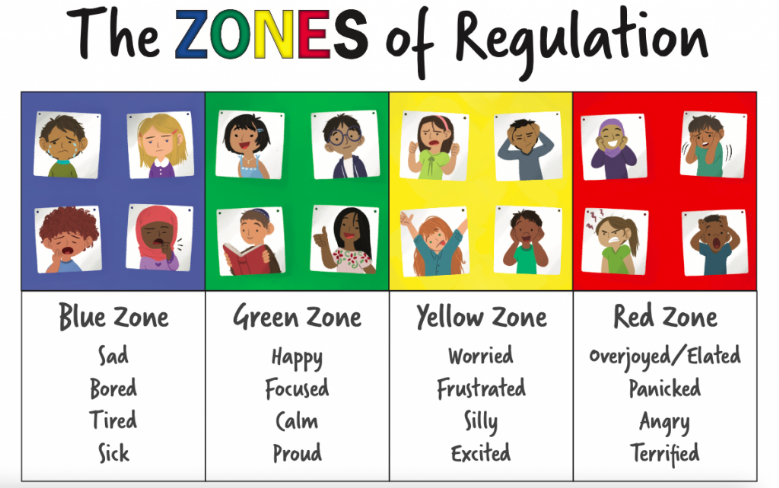
We teach the children that everyone experiences all of the Zones and none of them are ‘bad’. All of the Zones are expected at one time or another. We believe that is it ok not to be ok!
How we use Zones of Regulation at Leas Park
The Zones of Regulation is embedded across school life to support children’s emotional development, wellbeing, and readiness to learn.
We ensure a consistent whole-school approach so that children develop a shared language for emotions and regulation strategies that they can use confidently throughout the day.
🌟 Whole-school practice includes:
-
A consistent emotional language used across all classes and year groups
-
Staff modelling and reinforcing Zones strategies throughout the school day
-
Classroom Zones displays, stations, and toolkits to promote independence
-
Individual pupil toolkits to support personalised regulation strategies
-
Zones cards available for children who need additional support
-
Regular emotional check-ins (e.g. mornings, after play/lunch, and assemblies)
-
Weekly assemblies, including Zones Champion Awards to celebrate positive regulation
-
Termly Zones activities
-


🌿Additional support and enrichment:
-
ELSA support for pupils who need targeted emotional and social support
-
Forest School sessions that promote regulation, resilience, and wellbeing
🤝 Working together:
-
Parent engagement through newsletters and workshops
-
Training for midday staff to ensure consistency during unstructured times
-
Staff meetings and CPD to support reflection and ongoing development
📌 Further Information:
For more information, please refer to our weekly newsletter and explore the following Zones of Regulation websites for additional guidance and resources: